
Landlord vs Tenant Responsibilities: Who Handles What?
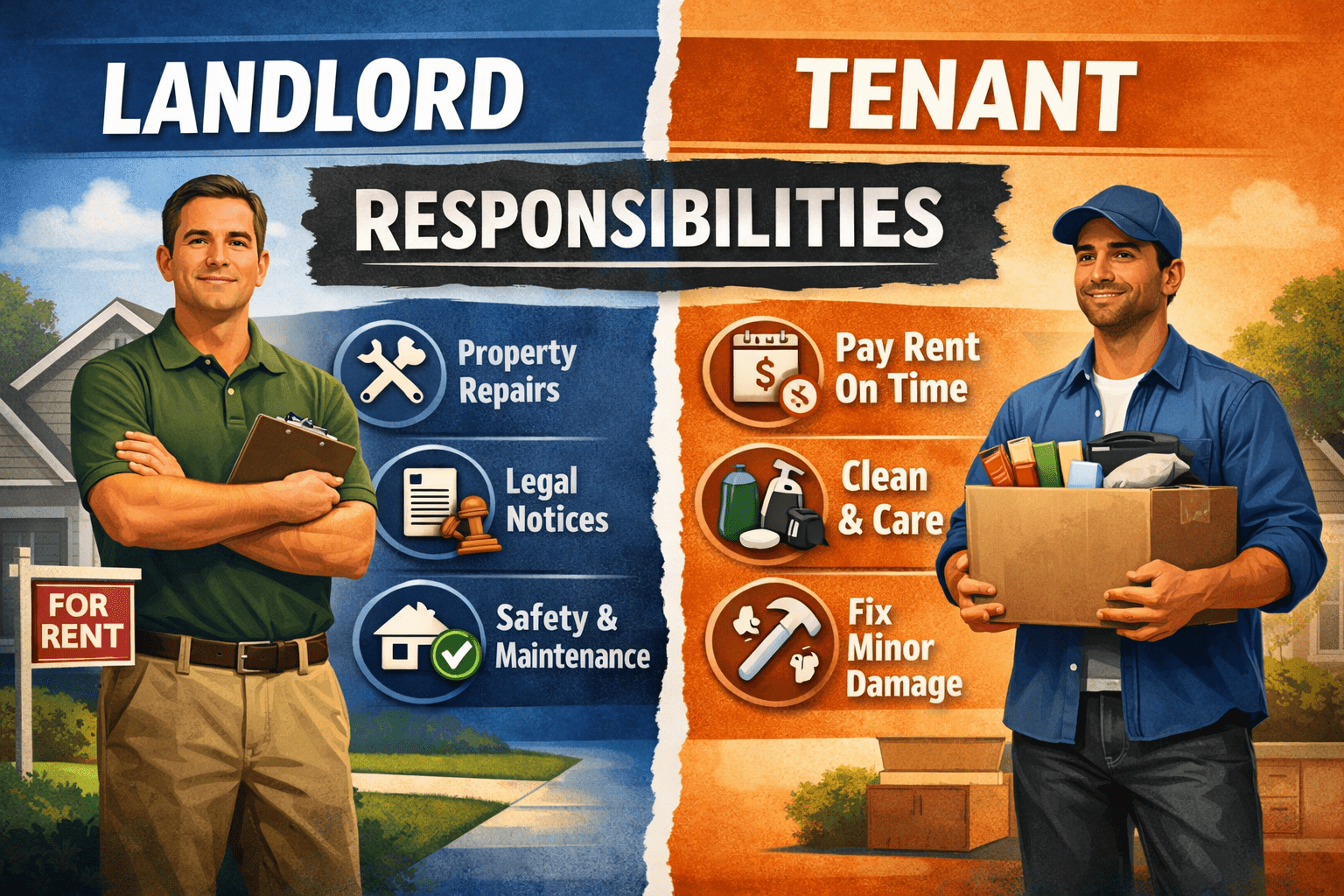
Landlord vs Tenant Responsibilities: Who Handles What?
One of the most common sources of conflict in rental housing comes down to a simple question: who is responsible for what?
When landlords and tenants clearly understand their responsibilities, properties run smoother, maintenance issues get resolved faster, and disputes are far less likely to escalate.
This guide breaks down landlord vs tenant responsibilities in plain English, covering maintenance, repairs, payments, legal obligations, and best practices—so everyone knows where the line is.
Why Responsibilities Matter in a Rental Relationship
Rental properties are a shared environment. Landlords own and maintain the asset, while tenants occupy and care for the space daily. Problems arise when expectations aren’t clear or when either party assumes the other is responsible.
Clear responsibility boundaries help:
-
Prevent delayed repairs
-
Reduce legal disputes
-
Protect property value
-
Improve tenant satisfaction
-
Maintain consistent cash flow
Most responsibilities are outlined in the lease agreement, but many are also governed by state and local landlord-tenant laws.
Back To Top
Landlord Responsibilities: What Property Owners Handle
Landlords are legally required to provide a safe, habitable living environment. These responsibilities generally cannot be waived, even if a lease tries to say otherwise.
Habitability & Safety
Landlords must ensure the property meets basic health and safety standards, including:
-
Structurally sound roof, walls, floors, and stairs
-
Working plumbing with hot and cold water
-
Reliable heating (and cooling where required)
-
Electrical systems that meet code
-
Proper locks, doors, and windows
-
Smoke detectors and carbon monoxide detectors
If a unit becomes uninhabitable due to no fault of the tenant, the landlord is responsible for correcting it promptly.
Major Repairs & System Failures
Landlords are responsible for repairing or replacing:
-
HVAC systems
-
Water heaters
-
Plumbing leaks inside walls
-
Sewer or septic issues
-
Electrical failures
-
Appliance failures (if appliances are landlord-provided)
Tenants should never attempt major repairs themselves unless explicitly authorized in writing.
Exterior & Common Areas
For multi-unit properties or managed communities, landlords typically maintain:
-
Landscaping and lawn care
-
Parking lots and sidewalks
-
Exterior lighting
-
Stairwells, hallways, and shared spaces
-
Trash collection (if provided)
These areas must remain safe and accessible.
Legal Compliance & Notices
Landlords must:
-
Follow fair housing laws
-
Provide required notices before entry
-
Handle security deposits according to state law
-
Maintain accurate records
-
Follow proper eviction procedures
Failure to comply can result in fines, lawsuits, or invalid lease enforcement.
Tenant Responsibilities: What Renters Are Expected to Do
Tenants also have clear obligations that protect the property and their tenancy.
Pay Rent on Time
This is the most basic responsibility. Tenants must:
-
Pay rent in full and on time
-
Follow payment methods outlined in the lease
-
Pay applicable late fees if rent is delayed
Consistent late payments can result in notices or non-renewal.
Keep the Unit Clean and Sanitary
Tenants are responsible for:
-
Regular cleaning
-
Proper disposal of trash
-
Preventing pest infestations caused by poor housekeeping
-
Keeping bathrooms, kitchens, and floors reasonably clean
Excessive filth or hoarding can be considered a lease violation.
Minor Maintenance & Everyday Care
Tenants typically handle:
-
Changing light bulbs
-
Replacing air filters (unless stated otherwise)
-
Keeping drains clear of hair and debris
-
Resetting tripped breakers
-
Reporting small issues before they become big ones
Ignoring minor problems can make tenants partially responsible for resulting damage.
Damage Caused by the Tenant
Tenants are responsible for damage beyond normal wear and tear, including:
-
Broken windows or doors
-
Holes in walls
-
Pet damage
-
Stains, burns, or misuse of fixtures
-
Unauthorized alterations
These costs are often deducted from the security deposit.
Maintenance Requests
-
Tenants must promptly report issues
-
Landlords must respond in a reasonable timeframe
Delayed reporting can worsen damage and complicate responsibility.
Inspections
-
Landlords conduct inspections with proper notice
-
Tenants must allow access and maintain reasonable conditions
Inspections protect both parties when done professionally.
Pest Control
-
Landlords typically handle treatment
-
Tenants must maintain cleanliness and report issues early
If pests result from tenant behavior, costs may shift.
Normal Wear and Tear vs Damage
This distinction causes many disputes.
Normal wear and tear includes:
-
Light carpet wear
-
Faded paint
-
Minor scuffs
Damage includes:
-
Large holes
-
Broken fixtures
-
Pet stains
-
Unauthorized paint colors
Understanding this difference helps tenants protect their deposit and landlords fairly assess costs.
What the Lease Agreement Controls
The lease is the primary document defining responsibilities. It often specifies:
-
Who changes air filters
-
Lawn care duties
-
Appliance responsibility
-
Utility payments
-
Maintenance request procedures
However, leases cannot override habitability laws.
How Professional Property Management Helps
Many disputes arise not from bad intentions, but from poor communication and unclear processes. Professional property management helps by:
-
Clearly defining responsibilities upfront
-
Documenting move-in and move-out conditions
-
Handling maintenance requests efficiently
-
Enforcing leases consistently
-
Acting as a neutral third party
For landlords, this protects the asset. For tenants, it ensures fair and professional treatment.
Final Thoughts
Understanding landlord vs tenant responsibilities creates a healthier rental experience for everyone involved. When each party knows their role—and respects the other’s—the result is fewer conflicts, better property care, and more stable tenancies.
Whether you’re a landlord managing multiple properties or a tenant wanting clarity and peace of mind, clear expectations are the foundation of a successful rental relationship.
