
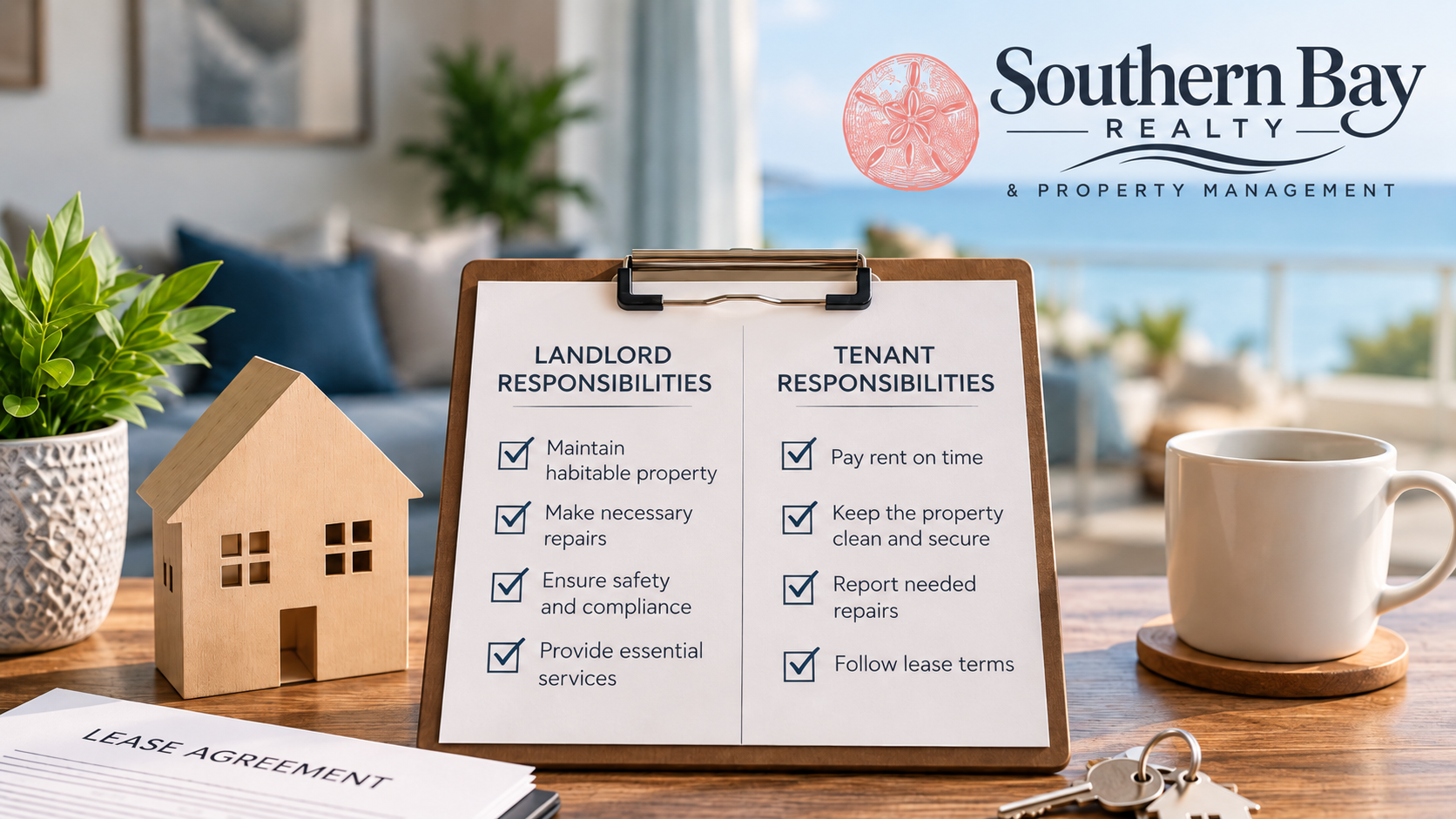
Landlord vs. Tenant Responsibilities in Alabama: Who Handles What?
One of the most common sources of conflict in rental housing is also one of the simplest questions: who is responsible for what?
For residential rentals in Mobile and Baldwin County, the answer usually depends on three things: Alabama law, the lease agreement, and what actually caused the problem.
Clear expectations help owners protect the property, help residents understand their obligations, and reduce the chance that a routine maintenance issue turns into a larger dispute.
This guide explains common landlord and tenant responsibilities in plain English, including maintenance, repairs, inspections, pest control, lawn care, damage, documentation, and the role of professional property management.
Learn About Property ManagementWhy Responsibilities Matter in a Rental Relationship
Rental housing works best when both the owner and the resident understand where their responsibilities begin and end.
In Alabama, residential landlord-tenant relationships are generally governed by the Alabama Uniform Residential Landlord and Tenant Act, together with the lease agreement and other applicable laws. The Act contains duties for both landlords and tenants and also limits certain lease provisions that cannot simply be waived by contract.
Clear responsibility boundaries can help:
- Prevent delayed repairs
- Reduce avoidable disputes
- Protect property condition
- Improve resident communication
- Support consistent rental income
- Create better documentation
For the statutory framework, owners and residents can review the Alabama Uniform Residential Landlord and Tenant Act.
Back to Top ↑Landlord Responsibilities: What Property Owners Generally Handle
Alabama law places important obligations on landlords, particularly when it comes to habitability, safety, building systems, common areas, and legal compliance.
Habitability & Safety
Landlords generally must maintain the premises in a habitable condition and comply with applicable building and housing codes that materially affect health and safety.
- Structural components
- Plumbing systems
- Electrical systems
- Heating and supplied systems
- Safe common areas
- Required sanitation facilities
Major Repairs & System Failures
When a major system supplied by the landlord fails through ordinary use rather than tenant misuse, the owner is generally responsible for addressing it. Examples can include HVAC systems, water heaters, major plumbing problems, electrical failures, and landlord-provided appliances.
Responsibility can vary depending on the property type, lease terms, and cause of the failure, so owners should avoid assuming every repair automatically belongs to one side.
Common Areas & Exterior Responsibilities
For multi-unit properties, owners commonly remain responsible for common areas such as hallways, stairs, parking areas, exterior lighting, and other shared spaces.
For single-family rentals, some exterior duties such as lawn care may be assigned to the resident in the lease. That is one reason clear lease drafting matters.
Legal Compliance & Notices
Landlords must also comply with applicable rules concerning fair housing, deposits, access, notices, lease enforcement, and other legal requirements.
Back to Top ↑Tenant Responsibilities: What Renters Are Expected to Do
Residents also have important obligations designed to protect the property and preserve the tenancy.
Pay Rent as Required
- Pay rent in full and on time
- Use the required payment method
- Follow lease deadlines
- Address late charges when applicable
Keep the Property Reasonably Clean and Safe
Residents are generally expected to maintain reasonable cleanliness, dispose of trash properly, use plumbing and fixtures appropriately, and avoid intentionally or negligently damaging the property.
Handle Everyday Care
Depending on the lease, residents may be responsible for routine items such as changing light bulbs, replacing HVAC filters, keeping drains free from preventable clogs, maintaining lawns, or completing other minor household tasks.
Report Problems Promptly
Small maintenance issues can become expensive problems when they are ignored. A resident who notices a leak, moisture problem, electrical concern, or other developing issue should report it promptly through the maintenance process established by the lease or property manager.
Damage Caused by the Resident
Residents can be financially responsible for damage caused by misuse, negligence, abuse, unauthorized alterations, or failure to report a problem before it becomes worse.
Back to Top ↑Normal Wear and Tear vs. Tenant Damage
This is one of the most common areas of disagreement at move-out.
Normal wear and tear generally results from ordinary use over time. Damage usually involves misuse, neglect, abuse, or an avoidable act that goes beyond ordinary aging.
Examples of Normal Wear
- Minor wall scuffs
- Faded paint
- Ordinary carpet wear
- Normal fixture aging
Examples of Potential Damage
- Large holes in walls
- Broken doors or fixtures
- Pet damage
- Burns or severe stains
- Unauthorized alterations
- Damage from unreported leaks
The property's move-in condition, age, expected useful life, photographs, inspection reports, repair history, and lease terms can all matter when determining whether a charge is appropriate.
Back to Top ↑What the Lease Agreement Controls
The lease is one of the most important documents in the landlord-tenant relationship, but it does not operate in isolation.
A well-written lease may address:
- HVAC filter replacement
- Lawn care duties
- Utility responsibility
- Pet rules
- Maintenance procedures
- Appliance responsibility
- Inspection requirements
- Resident conduct
Documentation Matters More Than Most People Realize
Many landlord-tenant disagreements are not really about what happened—they are about what can be proven.
Good rental documentation may include:
- Move-in inspection reports
- Move-in photographs
- Maintenance requests
- Written owner approvals
- Vendor invoices
- Resident communication
- Inspection records
- Move-out photographs
Organized records help protect both owners and residents by creating a clearer history of the condition of the property and how issues were handled.
Back to Top ↑Clear Responsibilities Start Before Move-In
A successful tenancy often begins before the lease is signed. Consistent qualification standards, clear expectations, and documented screening procedures can help reduce misunderstandings later.
Southern Bay Realty uses structured tenant screening criteria designed to evaluate applicants consistently while helping owners make informed leasing decisions.
Screening does not eliminate every future problem, but strong front-end processes can reduce avoidable risk and create a more professional starting point for the landlord-resident relationship.
Back to Top ↑How Professional Property Management Helps
Many disputes arise from unclear expectations, inconsistent communication, incomplete records, or delayed follow-through rather than bad intentions.
Professional property management across Mobile and Baldwin County can help by:
- Defining responsibilities clearly
- Documenting property condition
- Coordinating maintenance requests
- Applying lease terms consistently
- Maintaining organized owner records
- Providing professional communication
- Tracking rent and property activity
- Keeping issues from getting lost
A property manager is not a neutral third party in the sense of having no client—the manager represents the property owner under the management agreement. The value is in administering the property, lease, communication, and documentation professionally and consistently.
For owners, that helps protect the asset and reduce management burden. For residents, it creates clearer procedures and a more organized rental experience.
Back to Top ↑Final Thoughts
Landlord and tenant responsibilities are rarely as simple as “the owner always pays” or “the tenant always pays.” The correct answer usually depends on Alabama law, the lease, the type of property, and the cause of the issue.
For rental owners in Mobile and Baldwin County, clear leases, strong documentation, prompt maintenance communication, consistent tenant screening, and professional management can prevent many of the problems that create unnecessary conflict.
This article is general information and is not a substitute for legal advice regarding a specific lease, dispute, or property.
Back to Top ↑Want Rental Ownership to Be More Organized?
Southern Bay Realty & Property Management helps owners across Mobile and Baldwin County with tenant placement, screening, maintenance coordination, documentation, rent collection, reporting, and day-to-day rental oversight.
Explore Property Management