
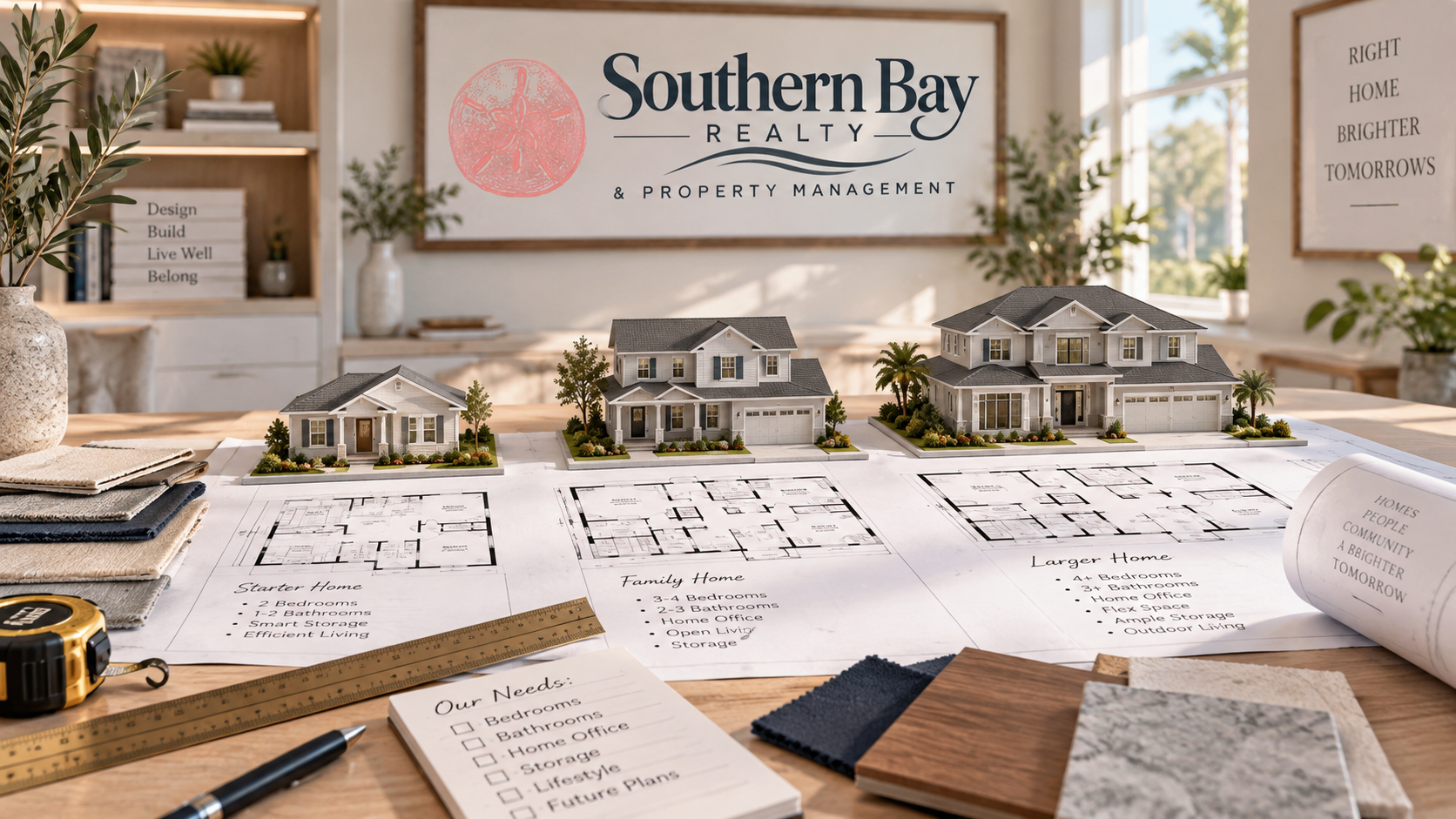
What Size Home Do I Need? How to Choose the Right Home for Your Life
Bigger is not automatically better, and smaller is not automatically smarter. The right home is the one that gives you enough space for the way you actually live without forcing you to pay for rooms, maintenance, and expenses you do not need.
Whether you are buying your first home, preparing for a growing family, downsizing, working from home, planning for retirement, or buying with long-term investment potential in mind, deciding how much house you really need deserves more thought than simply choosing a square-footage number.
This guide walks through the financial, practical, lifestyle, and long-term factors that can help buyers in Mobile, Baldwin County, and throughout the Alabama Gulf Coast find a home that actually fits.
Talk With Southern Bay RealtyHow Much House Do You Really Need?
There is no ideal square footage that works for every buyer. Two households with the same number of people can need completely different homes depending on how they live.
Instead of beginning with a number such as 1,500, 2,000, or 3,000 square feet, begin with three questions:
Bedrooms, bathrooms, kitchen space, storage, work areas, entertaining, pets, children, hobbies, and outdoor living all matter.
Your budget should include more than the mortgage. Taxes, insurance, utilities, maintenance, repairs, and furnishings also grow with the home.
Consider where your household, career, family, and lifestyle could realistically be several years from now.
The goal is not to buy the largest house your financing allows. It is to buy enough home for your real life while preserving the financial flexibility to enjoy it.
Start With Your Budget, Not the Square Footage
One of the easiest mistakes to make while house hunting is deciding how much home you want before deciding how much housing expense you actually want.
A lender may tell you what you can qualify to borrow, but that does not necessarily tell you what payment will leave your household comfortable. Your home should fit into the rest of your financial life rather than consume it. Buyers can also review the Consumer Financial Protection Bureau's home-buying resources for additional guidance on mortgages, closing costs, and preparing financially for homeownership.
Remember the costs beyond principal and interest
- Property taxes
- Homeowners insurance
- Possible flood insurance
- Utilities
- Routine maintenance
- Unexpected repairs
- HOA or condominium fees
- Lawn and landscaping costs
- Furniture and window treatments
- Heating and cooling larger spaces
Along the Alabama Gulf Coast, insurance, flood exposure, age of the home, roof condition, and location can materially change the cost of owning two otherwise similarly priced homes.
That is why a home that is slightly smaller but financially comfortable can sometimes be a much better lifestyle decision than stretching for additional square footage you rarely use.
Back to Top ↑Start With Bedrooms and Bathrooms Before Square Footage
Before worrying about the total size of the house, determine the minimum number of functional spaces your household needs.
Think through your bedroom needs
- Primary bedroom
- Bedrooms for children
- Guest bedroom
- Room for aging parents
- Potential nursery
- Flexible office or bedroom
Bathrooms can matter just as much
The difference between one bathroom and two bathrooms can be much more meaningful to everyday life than several hundred additional square feet. The same can be true of having a separate guest bath, double vanity, downstairs half bath, or bathroom near a secondary bedroom.
Focus first on how the home functions during a normal weekday morning. A beautifully oversized living room does not solve a household bottleneck created by too few bathrooms.
Back to Top ↑Layout Can Matter More Than Square Footage
One 1,800-square-foot home can feel larger and function better than another home with 2,200 square feet.
Why? Because not all square footage is equally useful.
- Long hallways can consume usable space
- Oversized formal rooms may rarely be used
- Open living areas can make smaller homes feel larger
- Good closets reduce the need for extra rooms
- A flexible bonus room can serve several purposes
- A poor kitchen layout can make a large home feel cramped
- Bedroom placement affects privacy
- Natural light can change how spacious a room feels
Do not shop for a square-footage number. Shop for usable space.
During a showing, imagine your actual furniture, daily routines, groceries, laundry, guests, pets, work equipment, and storage needs inside the home. That exercise often tells you more than the number printed on the listing.
Back to Top ↑Think About the Next Five to Ten Years
Buying solely for today's needs can create another move sooner than expected. Buying for every imaginable future possibility, however, can leave you paying for unused space for years.
The better approach is to consider changes that are reasonably likely.
- Marriage or partnership
- Children
- Adult children returning home
- Aging parents joining the household
- Working remotely
- Starting a home-based business
- Retirement
- Mobility or accessibility needs
- More frequent travel
- Changes in commute or employment
You do not need to predict your entire future. You simply want to avoid buying a property that becomes obviously impractical after one predictable life change.
Back to Top ↑Choosing the Right Size for Your First Home
First-time buyers often feel pressure from two directions: buy as much house as possible because you may "grow into it," or buy the smallest starter home possible because you can always move later.
Neither strategy is automatically right.
A good first home generally provides enough flexibility for your likely near-term needs without forcing you into unnecessary carrying costs.
First-time buyers should pay particular attention to:
- Comfortable monthly payment
- Maintenance requirements
- Commute and location
- Bedroom flexibility
- Resale appeal
- Potential rental appeal
- Neighborhood trajectory
- Expected length of ownership
If you are still learning the buying process, our comprehensive guide on how to buy a home walks through the process in much greater detail.
Back to Top ↑Upsizing for a Growing Household
A larger household can absolutely justify a larger home, but successful upsizing is about adding the right space rather than simply adding square feet.
A fourth bedroom, second living area, larger kitchen, additional bathroom, fenced yard, or better storage may transform daily life more than an enormous formal dining room or oversized foyer.
Ask what is actually causing your current home to feel too small
- Not enough bedrooms?
- Too few bathrooms?
- No private workspace?
- Insufficient storage?
- Children sharing space poorly?
- Kitchen too small for the household?
- No usable outdoor area?
- Parking or garage problems?
Identify the problem first. Otherwise, it is possible to buy a substantially bigger house and discover that the new layout still does not solve what frustrated you about the old one.
If upsizing means selling your current property, it can also help to understand whether you need a Realtor to sell your home and what professional representation actually provides before coordinating both sides of the move.
Back to Top ↑When Downsizing Makes Sense
Downsizing is not simply something people do after retirement. A smaller, more efficient home can make sense anytime the cost and responsibility of unused space outweigh its usefulness.
Downsizing may become attractive when:
- Children have moved away
- Several rooms are rarely used
- Maintenance has become burdensome
- You want to travel more
- You prefer a lower-maintenance lifestyle
- You want to reduce monthly housing expenses
- Stairs have become inconvenient
- You would rather live closer to amenities
The key is to right-size rather than simply downsize. Moving from a large house into a property that is too small for your hobbies, visiting family, storage, or lifestyle can create a different set of frustrations.
A well-designed smaller home with excellent storage and flexible rooms can often function better than a significantly larger house with wasted space.
Back to Top ↑Home Offices, Multigenerational Living, and Flexible Space
The traditional formula of counting household members and bedrooms is no longer enough for many buyers.
Work-from-home arrangements, home businesses, blended families, multigenerational households, homeschooling, fitness areas, and returning adult children can all change what "enough space" looks like.
Flexible space can be extremely valuable
A bonus room with a closet, guest room that doubles as an office, secondary living room, finished loft, or separate suite may allow one home to adapt through several different stages of life.
- Office today, nursery later
- Playroom today, teen room later
- Guest room today, caregiver room later
- Bonus room today, home gym later
- Separate suite for multigenerational living
- Flexible room for a home-based business
In many cases, flexibility is more valuable than raw size because it allows the same square footage to solve different needs over time.
Back to Top ↑Do Not Forget the Yard, Garage, and Storage
When buyers ask, "What size home do I need?" they often focus exclusively on heated and cooled square footage. Your actual living experience includes much more than the interior measurement.
Outdoor space
A large yard can be wonderful for children, pets, gardening, entertaining, pools, boats, or simply privacy. It also creates additional maintenance.
Garage and parking
A two-car garage, covered parking, workshop space, boat parking, or additional driveway area can be particularly valuable for Gulf Coast households depending on lifestyle and location.
Storage
Good closets, pantry space, attic storage, exterior storage, and a usable garage can make a modest-size home feel substantially more functional. Poor storage can make a large home feel cluttered.
Think about the entire property, not merely the number beside "square footage" on the listing.
Should You Choose More House or a Better Location?
This is one of the most important tradeoffs in real estate.
The same budget may buy a larger home farther from work, shopping, beaches, schools, entertainment, or family—or a smaller property in the location you actually prefer.
There is no universal answer, but buyers should consider how often they will benefit from the extra space compared with how often they will experience the location.
- Daily commute
- School preferences
- Neighborhood atmosphere
- Proximity to family
- Shopping and restaurants
- Water or beach access
- Property taxes and insurance
- Future resale appeal
In Mobile and Baldwin County, relatively short geographic distances can produce very different housing options, lifestyles, insurance considerations, lot sizes, price points, and property types.
That is one reason working with an agent who understands both your financial priorities and the local market can be more useful than simply setting a square-footage filter online.
Back to Top ↑Think About Resale and Investment Potential Too
Even when you are buying a primary residence, it is worth considering how the property may fit into your broader financial picture later.
You may eventually sell it. You may decide to keep it when you purchase another home. It may become a long-term rental, second home, or part of a larger real estate investment strategy.
Features that can influence future marketability include:
- Functional bedroom count
- Number of bathrooms
- Neighborhood demand
- School-zone demand
- Parking and garage space
- Lot usability
- Flexible floor plan
- Property condition
- Rental demand
- Location and accessibility
Buyers interested in building wealth through real estate should also review our information about buying and evaluating investment properties in Mobile and Baldwin County .
At Southern Bay Realty, we believe investment strategy should be tailored to the individual investor. A property that makes sense for appreciation, long-term rental income, vacation rental potential, or future personal use may look very different depending on your goals.
Back to Top ↑A Simple Way to Decide What Size Home You Need
Before beginning serious showings, work through these five steps.
Decide what you actually want to spend each month, not merely the maximum amount you may be able to finance.
Determine your minimum bedrooms, bathrooms, parking, storage, office, and outdoor requirements.
A home office may be necessary. A formal dining room may simply be nice to have. Know the difference before touring.
Plan for realistic changes over the next five to ten years without paying today for every possible future scenario.
Once touring homes, pay attention to layout, storage, location, and usable space—not just the advertised square footage.
The right home should fit your finances, your lifestyle, and the direction your life is actually heading.
Frequently Asked Questions About Choosing the Right Home Size
How many square feet does one person need in a house?
There is no universal square-footage requirement for one person. A buyer who travels frequently and prefers low maintenance may be extremely comfortable in a smaller home or condo, while someone working from home, entertaining frequently, owning multiple pets, or pursuing space-intensive hobbies may need considerably more room. Layout and usable space are often more important than the raw number.
Is a bigger house always a better investment?
No. Investment performance depends on purchase price, location, demand, condition, financing, operating costs, resale potential, and rental potential in addition to square footage. A smaller property in a highly desirable location may sometimes have stronger marketability than a much larger property elsewhere.
Should I buy extra bedrooms for future children?
It can make sense to plan for likely household growth, particularly if you expect to remain in the home for several years. The key is balancing future flexibility against the cost of purchasing and maintaining additional space before you need it.
Does the layout of a home matter more than square footage?
It often can. A smaller home with an efficient floor plan, good storage, appropriately sized rooms, and flexible living areas may function better than a larger home with wasted hallways, oversized formal spaces, limited storage, or an awkward layout.
How should working from home affect the size house I buy?
Consider whether you need a dedicated office or simply a quiet flexible space. If multiple household members work remotely, separate work areas may become more important than additional living-room square footage. Internet availability, noise separation, lighting, and privacy should also be considered.
How important is yard size when choosing a home?
Yard size should reflect how you intend to use the property. Children, pets, gardening, pools, outdoor entertaining, and privacy can make additional land valuable. Buyers who travel frequently or dislike yard maintenance may prefer a smaller lot or lower-maintenance community.
Should I buy a smaller home in a better location or a larger home farther away?
That depends on your priorities. Consider commute time, neighborhood preference, schools, nearby amenities, insurance and ownership costs, resale demand, and how often you will actually use the additional space. Location affects your daily experience with the property just as much as the house itself.
Should resale value matter if I plan to stay in the home a long time?
Yes, although it should not control every decision. Life plans can change unexpectedly. Considering future buyer demand, property condition, neighborhood appeal, functional layout, and potential rental use can give you more options if circumstances change later.
The Right Size Home Is the One That Fits Your Life
Choosing the right home is not a contest to see who can accumulate the most square footage.
A successful purchase balances space, layout, location, future flexibility, ownership costs, and long-term value.
Some buyers genuinely need more room. Others discover that a smaller, better-designed property in the right location gives them a better quality of life while preserving more financial flexibility.
Southern Bay Realty works with buyers and sellers throughout Mobile, Baldwin County, and the Alabama Gulf Coast. Whether you are buying your first house, looking for more room, downsizing, relocating, or evaluating a property as part of a long-term investment strategy, our goal is to help you evaluate the entire decision—not simply find a house with the right number beside "square feet."
Back to Top ↑Ready to Find a Home That Actually Fits?
Southern Bay Realty can help you evaluate homes throughout Mobile, Baldwin County, and the Alabama Gulf Coast based on your lifestyle, budget, location preferences, and long-term goals.
Talk With Southern Bay Realty